

Planning a bathroom: The ultimate guide to renovation and installation
Whether you're thinking about planning a bathroom or kicking off the renovation, our complete guide is full of useful tips and advice to achieve your dream bathroom.
Whether you are building a new home from scratch, renovating an existing one, or adding a new extension, you will need to find a trusted general contractor to carry out the building work for you. But how do you find a good builder in your area for the project?
This handy guide covers the builder selection process from end to end, explaining how to find a reputable, qualified builder in the UK as well as how to get good quotes, tips on your contract, and what fair and reasonable payment terms look like.
Finding a trusted professional to carry out your building work doesn’t need to be difficult; you can use our Find a Builder tool, ask for recommendations from tradespeople, friends, and family, or even look at local building works in your area.
To make sure the building firm you choose is reputable and right for the job, check their credentials, look at their testimonials, and ensure that they have the right insurances and experience with the type of work you need doing.
 Builders tip
"Don’t rush into deciding who does the work for you. Take your time, consider all your options and most importantly be relaxed, happy and 100% confident in who you get to do the work for you.”
McGinley’s Carpentry & Construction Ltd
Our members must pass a rigorous vetting and independent inspection process to join and have regular inspections to ensure high standards are maintained. We can also offer clients of FMB members a free Dispute Resolution Procedure should you ever need it.
Do you know a friend or family member who lives in your area, or a neighbour whose recent building project has left you seriously impressed? Ask them for the details of their builder. Using a recommended builder from a trusted source is one of the best ways to begin your search.
Who hasn’t subtly kept track of a building project in progress in their local area, wondering what the outcome will be? If you’ve been impressed by the results, then don’t be afraid to ask the homeowners which builders they used and whether they were happy with the work.
If you’ve used any other trades for projects on your home in the last few years – an electrician or plasterer, perhaps – and have been pleased with their work, why not ask them for any trusted builder contacts?
A great sign of a reliable builder is that they are more than happy to show you examples of their previous work and can provide testimonials from previous customers. Ask to visit their completed work and speak to their clients. When visiting past projects, ask the clients how they found the builders to work with, too.
Of course, you should hire a builder who has solid experience in the work you are expecting them to carry out — an office refurbishment is quite different from a bathroom renovation or a new kitchen. Any good builder should also be able to demonstrate a sound, up-to-date knowledge of current building regulations in the UK.

There are no formal builders’ qualifications that builders should possess in order to call themselves ‘a builder’. That's why we recommend you choose a builder from a trusted source such as the Federation of Master Builders, to avoid the risk of rogue traders.
Some builders may be able to show you a CSCS card (issued by the Construction Skills Certification Scheme) as proof that they have the appropriate training and qualifications for the job they carry out on site.
There are also qualifications such as a National Vocational Qualification (NVQ) in construction that can point to a builder’s knowledge of their trade.
Certain trades such as electricians and plumbers must have particular qualifications. For example, if you are using a plumber to fit a gas appliance, such as a cooker in your new kitchen, then ensure that they are Gas Safe Registered. When having electrical work carried out you should choose a contractor who is registered with a Competent Person Scheme, such as NICEIC or ELECSA.
You can also check whether a builder is a member of a reputable trade association, such as the FMB. Always ask for proof of membership and for true peace of mind contact the trade association directly to confirm. You can find out if somebody is a member of the FMB using our Check a Member tool.
In summary, you might want to look for the following:
FMB Master Builders are committed to high standards which is why they are proud to be part of the UK’s largest construction industry trade association.
Unlike non-member builders, FMB Master Builders agree to strict vetting on joining, ongoing onsite inspections, and a formal code of conduct to ensure they meet the high standards expected of a Master Builder company. We ensure members meet our quality and safety criteria by:
Conducting an on-site inspection of the builders’ work on joining as part of the membership application process.
Professionally vetting their trading history, credit history, public liability and employer’s liability insurance.
Enforcing our Code of Conduct which includes providing written quotes and contracts, complying with health and safety regulations, upholding standards, communicating diligently, ensuring guarantees, warranties and certificates are passed on to clients, and leaving your home clean and tidy with waste properly disposed of.
Finally, as the ultimate back-stop, our members and their clients can access our government approved disputes resolution service. The service is free and means we provide assistance to help get the work back on track should that be needed.

You should always get a minimum of three quotes from builders that have been recommended to you by a trusted source.
Another positive side-effect of taking your time to get three quotes is that you’ll be able to talk to different builders, tap into their experience as you walk through your ideas, and get a feel for whether you can build a good working relationship with them.
To make sure you get an accurate quote from your builder, provide them with as much detail as possible about your project. To be confi dent that the quotes refl ect the price you will end up paying, your tender documents should include:
You can pay an architect or house designer to produce planning drawings. Alternatively, many Master Builders offer design and build services and can create plans for you.
The ‘design and build’ service can often help you to better understand the full costs of your project from the outset, as opposed to paying for architectural drawings that you may not be able to afford to build.
Always ask whether the quote includes VAT and whether there are any other costs not mentioned — it can also help to ask your builder to separate out their costs for labour and materials.
Be upfront about your budget too. If the builder walks away then it’s better that it happens before the work begins. Remember that quotes should always be written and not verbal. FMB Master Builders will provide written quotes as a standard part of the service.
It’s important to choose a builder who shares your vision, and who you feel comfortable with, because they will be in your home for an extended period.
Even when you’ve made your choice, you still need to be crystal clear on what you expect the end result to be. Before signing the contract (see below), make sure you’ve discussed key issues such as:
It’s important to foster a feeling of mutual respect and trust from the start. This is a relationship that works both ways and you’ll get the best from your builder if you can work collaboratively and discuss their opinions and recommendations.
You should always enter into a written contract with your builder so that everybody involved in the project understands what has been agreed. A good contract can reduce the chance of confusion or disagreement, and provides peace of mind for you and your builder.
Your contract need not be an expensive legal document, and in fact the FMB supplies jargon-free contract templates to members. These contracts are fair, easy-to-understand, and can be readily adapted to your project. A good builder’s contract should include:
When it comes to paying your builder, your written contract should include details of how much your project will cost as well as a schedule of payment.
It is usual to split the payments up into stages for big building projects and extensions. Make sure you follow the payment schedule within your contract. Check that each stage has been completed before paying, and that the work has been approved by building and warranty inspectors if necessary.
Some subcontractors, such as electricians and plumbers might require payment in two stages — on completion of first fix works and on final completion of second fix.
You should also agree to the amount that you will hold back as retention until you are happy to sign off the work – often 2.5%-5% of the total.
Payment by bank transfer, cheque or credit card are all good, but avoid cash. To protect yourself against cyber crime, you should also check the bank details directly with your builder. It would also be sensible to transfer a small amount of money in the first instance to ensure it is received before transferring any large amounts.
It is quite common for builders to ask for deposits before starting a major job — this is to cover materials they need to order, subcontractors’ fees and equipment.
Requests for deposits vary. A 10% deposit is reasonable but do not pay more than 25%. You should probably walk away if you’re asked for 50% or even more upfront.
If you have asked for any made-to-order elements, such as timber windows, you should expect to pay a deposit for these, too. Ensure you get receipts for all deposits paid.
Once you’ve found at least three builders whose written quotes you are happy with, be sure to ask them the following questions before making your final decision:
Always ask to see certificates, including one that shows public liability cover. FMB members will have had to show us proof that they have the correct insurance before becoming a member. It can be wise to take out an insurance backed guarantee such as an FMB Building Work Guarantee* – covering you to fix structural defects in the event your builder is no longer able to fix them under their warranty – for example if they go out of business or retire.
You can also contact FMB Insurance to ask about what warranties you can take out as a homeowner to protect your property while building works take place.
* Policy administered by FMB Insurance which is authorised and regulated by the Financial Conduct Authority.
Whilst not a necessity, a builder who is VAT registered can offer another level of assurance. Any builder who offers to waive VAT for cash payments should set a few alarm bells ringing — tax evasion is against the law.
Good builders are often fully booked for a few months in advance. Plan ahead and ask your preferred builder when they can start.
Many Master Builders can project manage for you and bring in good local trades from their network, saving you time and hassle. Decide if you want your builder to take overall control, or to manage particular parts of the project, and make it clear who’s responsible for other trades required on the job.
Confirm when you can expect to receive any required certificates, warranty documents and product instructions. Diligence here is another sign of a thoughtful builder. Make sure that your builder will walk through the project with you on final completion and that they’ll come back to fix snagging issues such as faults and problems that you spot after the work is done. An agreement to address snagging issues should be outlined in your contract.
Make sure that your builder will walk through the project with you on final completion and that they’ll come back to fi x snagging issues such as faults and problems that you spot after the work is done. An agreement to address snagging issues should be outlined in your contract.

Whether you're thinking about planning a bathroom or kicking off the renovation, our complete guide is full of useful tips and advice to achieve your dream bathroom.

Our complete guide takes you through every step of the process from how to develop a kitchen plan to finding a reputable builder and sticking to your budget - not to mention some great ideas to inspire you along the way.
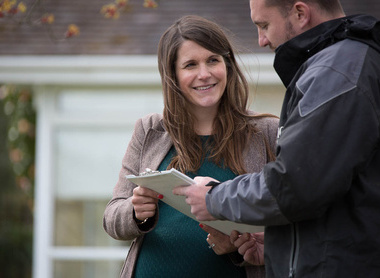
A successful building project relies on a good working partnership and open communication between you and your builder.