

How to choose a trusted builder in the UK
Need help choosing a builder? Follow our step-by-step guide to find trusted, vetted professionals for your home build, renovation or extension.
Planning permission (sometimes known as planning consent) refers to the approval given by the local authority under the power given to it by the 1948 Town and Country Planning Act to allow the building of, or changes to, a building. Its primary purpose is to ensure that any proposed development aligns with local planning policies, considers the impact on the surrounding area, and adheres to design and safety standards.
It’s always best to contact your local planning department to find out if you need to apply for planning permission before you submit an application – they will be the ones reviewing it. Not all building work, extensions or home alterations need planning permission, some changes fall under what’s known as permitted development. You can find out who your local authority is here.
Planning applications are submitted and administered via an online planning portal, which is differs depending on where you live in the UK:
Your local authority considers your application and gathers public feedback from your neighbours to help make their decision. They will provide feedback via the portal and you may need to amend your plans and re-submit them. Both planning permission and building regulations approval may be needed for your work. Local authority Building Control (LABC) offer practical advice on building regulations for homeowners on their Front Door website.
In the case of complete new builds, some larger extensions, and conversions (eg changing the use of a building from a barn to a house) planning permission will almost always be required, and if you live in a listed building you will need Listed Building Consent.
In many cases, small extensions might qualify for permitted development, meaning you don't need formal planning permission. However, specific size and design limitations apply, for example:
Local restrictions and different rules for listed buildings may apply – see below.
Some renovation work needs planning permission, as do most conversions (eg changing the use of a building from a barn to a house). Planning permission is not required in all cases, but always check with your local planning department if you’re in any doubt. Minor alterations may well be allowed under Permitted Development.
Building a new house always requires full planning permission. This allows the local authority to assess the project's impact on the surrounding area and ensure it aligns with planning policies. They need to assess:
Anyone living in a listed building must obtain Listed Building Consent from their local authority before starting any building work, including alterations or extensions that will affect the building’s character as a building of special architectural or historic interest — it is a criminal offence to carry out work requiring listed building consent without obtaining it first. You might also need consent to carry out work to any outbuildings in the grounds if your home is listed.
It’s also worth noting that planning permission might be needed in addition to Listed Building Consent. Contact the planning or conservation officers at your local planning authority to find out.
To check if your building is listed, visit:
Buildings located in designated areas, such as a Conservation Area, Area of Outstanding Natural Beauty or within a National Park, have an extra layer of scrutiny applied to any renovation or extension work. You can check with your local authority if your property lies within one of these areas.
In properties within these ‘designated areas’ permitted development rights tend to be more restricted, and you may well need to apply for planning permission for types of work that would not otherwise require an application.
One of the main restrictions placed on buildings within Conservation Areas tends to be when it comes to demolition. You will need planning permission in order to demolish a building within a Conservation Area unless:
The best advice is to contact your local planning authority to discuss your proposals — they will tell you whether or not your development will be permitted.
If you go ahead with a project that requires planning permission without first gaining consent, your local authority might request that you demolish it or submit a retrospective planning application for work carried out without consent, although this does not mean permission will be granted. If the retrospective application is refused, the local authority could issue you with an enforcement notice meaning you will have to reverse the work.
You should also be aware that properties that have had work carried out to them illegally are unmortgageable — a problem that will most definitely come to light should you try to sell.
Another option available is to ask your Local authority for a pre-application planning meeting.
This can be used to discuss your plans and get advice from a member of the planning team before submitting your application. They will typically be able to flag any obvious issues with your plans, giving you time to amend them.

Permitted development is a scheme that allows homeowners to undertake specific home improvement projects, like small extensions, without needing formal planning permission from the local authority. However, it's important to remember that these rights don't apply to flats, maisonettes, some newer homes and listed buildings.
It’s a good idea to apply for a Lawful Development Certificate for any work you do under permitted development. If you decide to sell your property, being able to prove that your building work is compliant with planning regulations will leave no ambiguity for the buyer and can help to smooth the sale process. You can apply for one via the planning portal in your region, but note that a fee is usually applicable.
Read our ultimate guide to permitted development rules for further information.
Prior approval (previously known as the ‘neighbourhood consultation scheme’) is required from your local authority for specific types of permitted development. It means that before you begin work, you must notify the local planning authority of the details of the project before work can begin.
Prior approval takes around eight weeks to process and mainly applies to:
The local planning authority will notify boundary neighbours, and if no objections are received (or considered to have any merit), and the local planning authority is happy that there will be no adverse impacts from flooding, highways or contaminations, then a Lawful Development Certificate will be issued.
While prior approval involves informing your local authority, it doesn't require their formal approval. They will assess your notification and may raise concerns or require minor adjustments (regarding choice of materials for instance, or whether your plans meet the objectives of the National Planning Policy Framework. However, they cannot block the development if it truly falls under permitted development rights.

Along with the application form, you will need to submit the following if you apply online:
Planning permission lasts for three years from the date when full consent is given, in most cases. In other words, you must begin building work within this time. Once work has formally commenced (which is after the first building regulations inspection) planning permission lasts forever.
The cost of planning permission varies depending on where you live in the UK. Currently, the costs are as follows:
Northern Ireland
Prices correct at March 2024.
The whole process can take as little as eight weeks, but more complex designs can take longer. The process includes:
It’s worth noting that even after receiving planning permission, specific conditions might be attached regarding materials, such as bricks or roof tiles, for example.
While you wait, use the waiting period productively, so you’re ready to get going as soon as possible.
If your application is refused you have two choices. You can either:
In either case, you need to ascertain the reasons for your refusal in order to move forward in a way that will result in a positive final outcome.
Once you have submitted your application, there will have been a period of ‘public consultation’ lasting between three and eight weeks. During this time, anyone who might be affected by your proposals is consulted. They may raise objections, although these do not always impact the final decision of the case officer in charge of your application.
If, during this period, it looks like your application will be rejected, you have the option to withdraw the application, make changes you think necessary, and resubmit — free of charge (if done within 12 months).
If your application is refused, you will receive a formal notice of refusal, listing the reasons the application has been declined. If there is anything on the notice you don’t understand (planning jargon can be difficult to decipher), you can ask the planning committee or the case officer.
Reasons for refusal vary, but range from your building work being outside the development boundary to it having a negative impact on the surrounding environment. Sometimes, the privacy rights of neighbouring homes are cited as a reason for refusal, or the changes you are making are deemed out-of-keeping with the local street scene.
If you choose to launch an appeal, then it must be lodged within three months. Details of how to appeal are sent out with refusal notices, which usually states which local planning policy your application contravenes — as a result of this, any appeal you lodge must show how this will no longer be the case.
If you decide to stick with your original plans, your appeal should include all the reasons why you think your application should have been granted permission. You must also complete forms that will be sent to you from the council. It can help to use the services of a planning consultant, although you will need to factor in the cost of doing this.
The council must respond within six weeks of your appeal being submitted, after which you have three weeks to respond again. Then a planning inspector will visit your site and give their decision on the appeal within two to six weeks of their visit — appeals can take from around five months.
Resubmitting your application, with an amended set of plans, that take into account the original reasons for refusal, is likely to be more straightforward than the appeals process.
At the FMB, we have expert advice on a range of home projects and the more technical aspects of planning a building project.
Read our guide to planning a new kitchen, find help with planning a new bathroom, learn about party wall agreements with our useful series of ultimate guides, or browse the blog for inspiration.

Need help choosing a builder? Follow our step-by-step guide to find trusted, vetted professionals for your home build, renovation or extension.
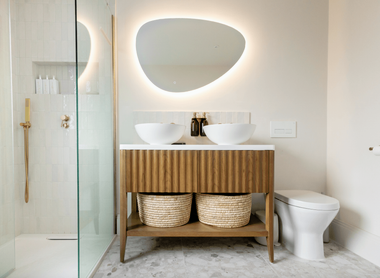
Whether you're thinking about planning a bathroom or kicking off the renovation, our complete guide is full of useful tips and advice to achieve your dream bathroom.
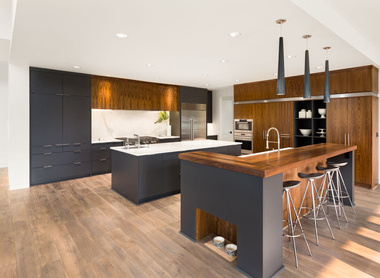
Our complete guide takes you through every step of the process from how to develop a kitchen plan to finding a reputable builder and sticking to your budget - not to mention some great ideas to inspire you along the way.