
Many builders spend hours visiting properties and preparing quotes that never turn into work.
Some homeowners are still exploring ideas, while others may be getting more quotes in before deciding whether to go ahead. In some cases the project might not yet have drawings, a clear scope or a realistic budget.
Learning how to qualify enquiries before quoting can help builders avoid wasting time and focus on the projects most likely to move forward. By asking a few key questions early on, you can quickly see whether a project is ready to progress and whether it is the right fit for your business.
In this guide, we explain how builders can qualify sales leads, assess enquiries and focus on the building projects most likely to go ahead.
How to get more building work by qualifying the right leads
Many builders think the answer to getting more building work is generating more enquiries. In reality, the bigger challenge is identifying which enquiries are worth pursuing.
Qualifying sales leads helps you focus on the projects most likely to move forward, reduce time spent on quotes that go nowhere, and prioritise the work that suits your team and experience.
Start by defining your ideal project
Many builders fall into the trap of pricing every enquiry that comes their way. But if you want to build a stronger pipeline of work, it helps to be clear about the type of projects you want to win.
Think about:
- The type of work your team is best at
- The project size that suits your capacity
- The projects that deliver the best margins
- The locations you prefer to work in
If most of the enquiries you respond to are small jobs, it will be difficult to move into larger or more profitable work. Being selective about which enquiries you pursue can help you focus on the projects that match your expertise. It can also help you to position your business more clearly when marketing your services.

Identify the type of client you want to work with
Once you know your ideal project, the next step is understanding who typically commissions that work.
This could include:
- Homeowners planning extensions or renovations
- Property developers
- Architects managing larger projects
Understanding where your ideal projects come from can help you focus your time and marketing efforts more effectively. For builders working on higher-value residential projects, relationships with architects and designers can often play an important role.
Understand the problems your client needs to solve
Clients rarely choose a builder based on price alone. They are usually looking for reassurance that the project will be delivered safely, professionally and with minimal disruption.
For example, a homeowner living in the property during building work may be concerned about:
- Site safety
- Clear communication
- Keeping the home usable during the project
Another client may be more concerned about project management or meeting a specific deadline.nderstanding these priorities helps builders explain how their approach meets the client’s needs
Show why your business offers value
One of the biggest challenges builders face is competing against cheaper quotes. But price is not always the deciding factor for clients. Clients often look for evidence that a builder is reliable and experienced.
This usually comes down to three things:
- Trust
- Credibility
- Value

Build trust
Trust can come from several sources, including:
- Positive client reviews
- Clear communication
- Honest advice during the quoting stage
- Transparent and detailed quotations
Positive reviews and testimonials can be particularly powerful because they provide reassurance from people who have already worked with you.
Demonstrate credibility
Clients also want evidence that you can deliver the type of project they are planning.
This could include:
- Case studies on your website
- Project photos on social media
- Industry awards
- Professional accreditations
- Membership of organisations such as the Federation of Master Builders (FMB)
For example, FMB members can explain to clients that their work has been inspected, and their business has been vetted. This helps to demonstrate professionalism and reliability.
Using your FMB membership to build credibility
If you're an FMB member, your membership can also help reinforce trust with potential clients. Display the FMB badge on your website, quotes and marketing material, and link to your member profile on the FMB website. You can also explain that membership means:
- Your business has been vetted as part of the membership process.
- Your work has been independently inspected.
- You follow recognised industry standards.
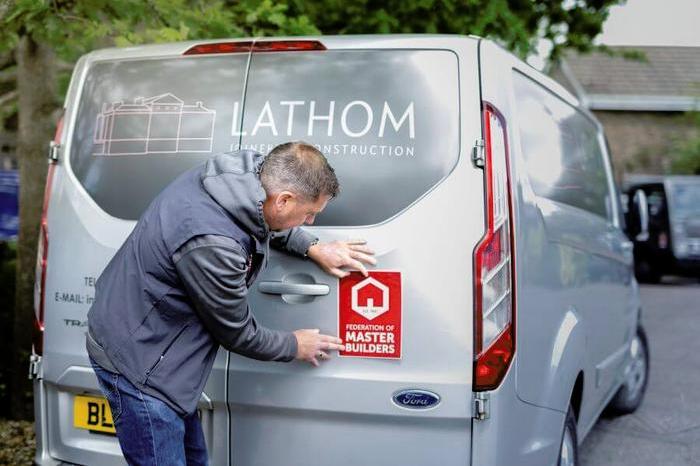
FMB members can access logos, badges and guidance on how to use them through the member resources area. Not a member yet? Take a look at some of the benefits here.
Focus on the value the client needs
Two clients may commission the same type of building project but care about different things. One homeowner may want a builder who can fully manage the project while they are away. Another may be living in the property during the works and need reassurance about safety, cleanliness and clear communication.
Builders who understand these priorities can explain how their approach addresses the client’s needs. This can help clients see the value of the service being offered, rather than focusing only on the price of the quote.
Improve your sales process
Even when builders receive good enquiries, projects can still be lost if the process is not managed consistently.
A simple sales process might include:
- Enquiry received
- Initial qualification call
- Site visit
- Quotation prepared
- Follow-up conversation
Mapping out these stages can help identify where enquiries are being lost. For example, delays in responding to enquiries or sending quotes can cause potential projects to drop away before the client makes a decision.
Follow up on quotes
Following up is one of the simplest ways to improve your chances of winning work. However, many builders avoid doing this. There are many reasons why a client may not respond straight away:
- The quote email may have gone to spam.
- They may have questions about the scope.
- They may be comparing quotes.
A quick follow-up call or message can help clarify the situation and keep the conversation moving.

Use simple systems to manage enquiries
As a builder, you don't necessarily need complex systems to manage enquiries, but having a clear process can help. Some builders use Customer relationship management (CRM) tools to track enquiries through stages such as:
- Enquiry received
- Site visit completed
- Quote sent
- Follow-up scheduled
Even a simple spreadsheet can help ensure enquiries are followed up and managed consistently.
Keeping track of enquiries can also help you to understand which types of projects you're winning most often.
Key takeaway
Qualifying sales leads is about focusing your time on the work that is most likely to move forward and deliver value for your business.
By:
- Defining your ideal project
- Understanding the client you want to work with
- Demonstrating trust, credibility and value
- Managing your sales process effectively
…builders can improve their chances of winning better projects and building a stronger pipeline of work.
Watch the webinar: qualifying sales leads for builders
The ideas in this article are explored in more detail in an FMB webinar featuring former builder and business coach Greg Wilkes.
In the session, Greg shares practical insights from his experience running a construction business and explains how builders can improve their sales process.
In the webinar you will learn:
-
How to identify your ideal project.
-
Why understanding client problems helps you to win work.
-
How to demonstrate trust, credibility and value.
-
How to manage enquiries through a simple sales funnel.
Download Greg's workbook
Frequently asked questions about qualifying job leads
These are the questions builders ask about how to qualify their job leads and win more of the right type of work for their construction business.
How do builders get more work?
Builders often get more work by combining several approaches, including:
- Building a strong reputation and collecting client reviews
- Maintaining relationships with architects and designers
- Showcasing completed projects on their website and social media
- Responding quickly to enquiries
- Qualifying leads to focus on the projects most likely to proceed
Focusing on the right enquiries can often improve results more than simply trying to generate more leads.
How do I qualify sales leads as a builder?
Qualifying sales leads means checking whether an enquiry is a good fit for your business before spending time on site visits and quotes.
A short conversation at the start can help you understand:
- What type of project the client is planning
- Whether the work fits your specialism
- Whether drawings or plans are available
- When the client wants to start the work
- Whether a realistic budget has been considered
If the project matches the type of work you want to take on, you can move forward with a site visit or estimate.
What questions should I ask a potential client before quoting?
Before preparing a quote, it helps to ask a few key questions so you understand the scope of the project.
Typical questions include:
- What type of work are you planning?
- Do you have drawings or planning permission yet?
- When would you like the project to start?
- Have you worked with an architect or designer?
- Have you set a budget for the project?
These questions help you understand whether the enquiry is ready for a quote or still at an early stage.
Why do builders lose jobs after sending a quote?
There are several common reasons why builders lose work after sending a quote.
Sometimes the quote may arrive too late or the client may not fully understand what is included. In other cases, the client may simply be comparing several builders.
Following up can help you understand what the client is thinking and answer any questions they may have. A quick call or message after sending a quote can often keep the conversation moving and improve your chances of winning the job.
How can builders win better building projects?
Winning better projects usually starts with being clear about the type of work you want to do.
You can improve your chances by:
- Focusing on a specific type of project, such as extensions or renovations
- Showcasing similar work through photos and case studies
- Building relationships with architects and designers
- Demonstrating reliability and professionalism
Clients are more likely to choose a builder who clearly shows experience delivering similar projects.
How can builders avoid competing on price?
Price will always be part of the decision, but it does not have to be the only factor.
Builders can stand out by showing the value they offer. This might include:
- Clear and detailed quotations
- Strong communication throughout the project
- Positive client reviews and testimonials
- Evidence of previous projects and experience
- Professional memberships or accreditations
When clients trust a builder and understand the value they provide, they are less likely to choose purely on price.
Should builders follow up with clients after sending a quote?
Yes. Following up after sending a quote can make a big difference.
Clients sometimes do not respond straight away because:
- The email has gone into a spam folder
- They are still reviewing the information
- They have questions about the quote
A polite follow-up call or message a few days later can help confirm that the quote was received and give the client an opportunity to ask questions.
This can improve your chances of winning the project.
What to read next