

With space at a premium and the cost and hassle of moving still high, it’s no wonder that over 20% of builder enquiries to FMB members are for home extensions*. A single-storey extension is a popular way to gain living space, improve functionality, and add value.
But while extensions are familiar in concept, the reality of planning, budgeting, permissions, and construction can feel far less straightforward. Costs vary widely, regulations can be misunderstood, and early design decisions often have long-term financial consequences.
This guide is designed to demystify budgeting for your extension.
(*Over 20% of enquiries through the Federation of Master Builder's Find a Builder service during 2025 related to extensions.)
What is the average single-storey extension cost?
In the UK, the average cost of a single-storey extension is between £1,800 and £3,000 per square metre. However, this figure depends on several factors, including the location of your property, with prices in London and the South East higher than in other areas, and the quality of work – premium finishes demand premium prices.
 Builder's tip
A single-storey rear extension delivers the greatest increase in usable living space, natural light, and property value while avoiding many of the structural complexity and planning constraints associated with side or multi-storey builds.
Read our comprehensive guide to home extensions for more information.
What drives single-storey extension costs?
Understanding what influences the cost of a single-storey extension helps you budget confidently and avoid unwelcome surprises.
Size and scale
Most builders quote projects based on price per square metre, and naturally, the larger the footprint, the more materials and labour are required.
The cost of a simple rear extension is around £1,00 to £2,500 per square metre, depending on specification and location.
Smaller builds may feel disproportionately expensive per square metre because fixed costs like scaffolding, foundations and site setup don’t scale down. Larger footprints often offer better overall cost efficiency.
Location and regional cost differences
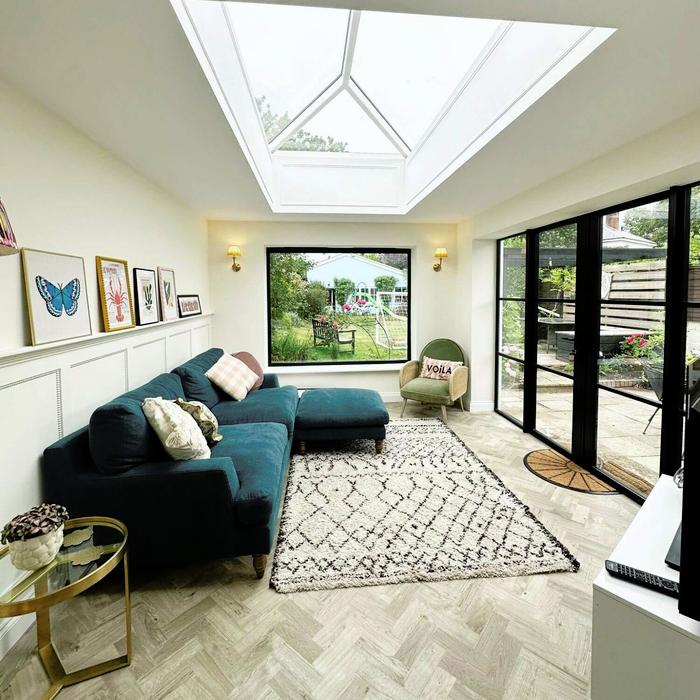
Location plays a significant role. In places like London and the South East, labour and materials typically cost more than elsewhere in the UK — in some cases, extensions can cost 30-50% more per square metre than the national average.
Urban sites with restricted access or challenging parking can also increase single-floor extension costs compared to suburban plots with easy access and parking.
Structural complexity and ground conditions
Your existing property will dictate how straightforward the build is. Projects that require complex logistics all add time and cost, and include:
- Removing load-bearing walls
- Installing supporting steelwork
- Working around poor ground conditions
- Navigating difficult drainage or utility relocations
Specification and finish
The choice of materials and finishes has a marked impact on price. Choosing standard doors and windows will keep costs lower; however high-performance insulation and premium finishes will see your budget rise.
For example, structural glazing and feature bifold doors often require larger steel beams and additional detailing, both of which add to labour and material costs.
Are rear extensions more cost effective than other types?
Often, yes.
Rear extensions typically avoid many complications seen with:
- Side return extensions
- Wrap-around designs
- Multi-storey projects
Those formats can be excellent solutions but frequently involve greater structural and logistical complexity.
What are the hidden costs of a UK house extension in 2026?
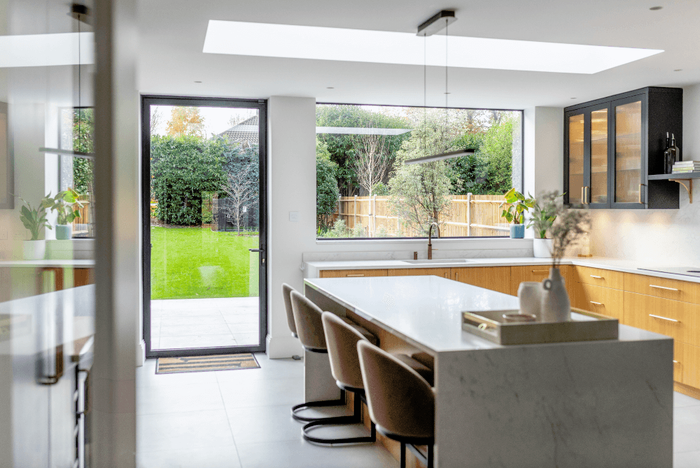
As with many construction projects, an extension is subject to hidden costs that may not be immediately apparent.
Labour
Labour costs make up a large percentage of your overall budget. Unlike materials, labour pricing varies significantly based on location, project complexity, and the mix of trades required.
Depending on the scope of your rear extension project, you may require multiple specialist trades, including groundworkers, bricklayers, carpenters, roofers, electricians, and plasterers, which all influence the final cost.
VAT (Value Added Tax)
Home extensions attract 20% VAT on labour and materials, however, it's worth noting that a special 0% VAT rate applies to some energy efficiency measures until 31 March 2027. So, always confirm whether quotes are inclusive or exclusive of VAT.
Professional fees and compliance
The construction is only part of the extension story, and once material and labour costs are included, it’s crucial to factor in compliance costs, regulatory requirements, and any necessary inspections.
These combined professional costs can add approximately 15-20% to your overall project budget, depending on the project’s complexity.
Design and architecture
Depending on project complexity, before the construction begins, homeowners may need:
- Measured surveys
- Concept designs
- Planning drawings
- Building Regulations drawings

Structural engineer
Where structural elements are altered — such as removing load-bearing walls or installing large bi-fold door openings, structural calculations are essential.
Planning permission or Lawful Development Certificates
In 2026, submitting a planning application for an extension costs £206, but not every project requires one. Many household extensions — especially modest rear additions, are covered by Permitted Development rights, allowing work to proceed without full planning permission.
Obtaining a Lawful Development Certificate (LDC) is widely regarded as a sensible precaution. The local authority issues an LDC and formally verifies that the proposed or completed extension complies with planning rules.
This documentation is often useful during a future sale, as buyers’ solicitors regularly seek confirmation that alterations were carried out legally. The fee for a Lawful Development Certificate is normally 50% of the standard householder planning application charge.
Party wall surveyor fees
If the extension works affect neighbouring structures, such as any shared walls, the Party Wall etc. Act 1996 may apply. This can introduce surveyor costs, which vary depending on neighbour responses and project scope.
Practical disruption costs
Depending on the scale of the single-floor rear extension, there may be additional expenses to consider, including:
- Temporary kitchen arrangements
- Storage solutions
- Protective works
- Short-term accommodation
These costs rarely appear in early budgets but can significantly affect the total spend.
Finding the best builder for your project
A 2025 survey by the HomeOwners Alliance and FMB found that 47% of UK adults believe that builders have to be legally licensed - worryingly, this is incorrect, and currently, no licensing requirement exists. This could put your extension and your money at risk.
All our members are:
- Vetted before they can join the FMB - we check their background so you know they're reputable.
- Inspected for the trades listed on their profile - they can do the job to a high standard.
- Able to offer you a contract - for peace of mind.
All our members agree to abide by our Code of Conduct and as their client, you would have access to an impartial disputes resolution service, should you need it. Enter your postcode to search for trusted builders near you.
Single-floor extension cost examples
Popular single storey extension designs include:
- Small extension (3×3m): These are often used to increase kitchen or utility spaces. However, professional fees and groundwork costs remain largely unchanged, meaning that the pricing rarely scales down neatly.
- Mid-sized rear extension (3×6m): A very common configuration for semi-detached homes. Because fixed costs are spread over a larger area, the price per sqm often becomes more efficient.
- Deeper rear extensions (up to 6m depth): While a larger extension delivers dramatic internal changes, it can introduce additional considerations:
- Permitted development limits
- Neighbour consultations
- Structural loading
Can I build a 3-metre extension without planning permission in the UK?
In many cases, yes. A single-storey rear extension can often be built under Permitted Development rights, which typically allow extensions of up to 3 metres for a terraced or semi-detached house, and up to 4 metres for detached houses.
However, this depends on factors such as previous alterations, property type, and location (for example, conservation areas or listed buildings may have restrictions).

Market conditions, sustainability and cost trends 2026
Extension costs do not exist in a vacuum, and broader market conditions, including regulatory changes and supply pressures also impact pricing for residential building projects.
Post-2025 price stability
Pre 2025, the construction industry experienced supply chain disruptions, which led to price increases. However, while still elevated, much of the residential sector has shown greater price stability.
Sustainability and 2026 building regulations
Higher insulation standards and improved energy efficiency measures are increasingly central to extension project discussions, especially with the 2026 building regulations upgrade.
Potential cost factors include:
- Enhanced insulation specifications
- Glazing performance upgrades
- Low-carbon heating integration
- Heat pump compatibility
While there are higher upfront costs to install these measures, they often reduce long-term running costs and futureproof the property.
Labour availability
Ongoing skills shortages continue to affect parts of the UK construction sector, and demand for experienced trades such as bricklayers, carpenters and specialist installers remains high. Constraints in labour availability can have a noticeable effect on factors such as:
- Project start dates
- Programme durations
- Labour rates
A single-storey extension delivers valuable additional space and transforms how a home works. Taking time to plan carefully and working with experienced professionals helps minimise costs and deliver smoother, more predictable projects.
Ready for a quote?
When it's time to get a few quotes in for your extension, you can search for local, trusted builders with the Federation of Master Builders. All of our members have been vetted, and their work has been inspected to make sure they can do a great job. Enter your postcode below to get going.