

House insulation: The ultimate guide
Learn how the right house insulation cuts energy bills, boosts comfort and adds value – expert advice from the FMB.
External wall insulation is frequently considered as a way to improve energy efficiency, reduce heat loss, and refresh tired façades. It is particularly relevant for solid wall properties, which make up a significant portion of the UK housing stock.
However, before you start planning this project and looking forward to saving money on your energy bills, you need to know how much to budget.
External wall insulation, often simply referred to as EWI, costs between £85 and £130 per square metre, making a standard three-bedroom semi-detached property cost an average of £10,000, depending on the chosen materials, the property’s location, and the finished quality.
External wall insulation is a method of improving a property’s thermal performance by fixing insulation boards to the outside surface of the exterior walls and then covering them with a protective finish, typically a specialist render system or cladding. The insulation thickness should be between 50mm and 100mm to be effective.
Once the existing surface has been removed, the process generally involves:
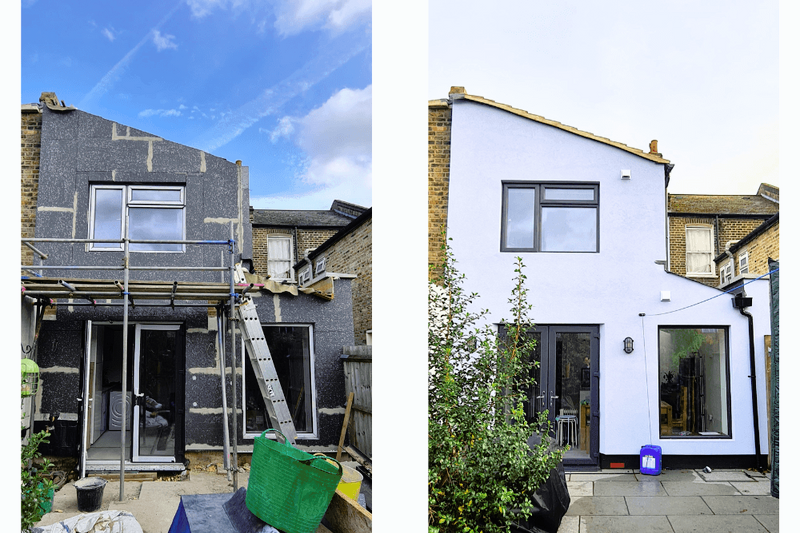
Unlike internal insulation, external wall insulation enhances energy efficiency without reducing internal floor space and can simultaneously refresh a property's appearance. It is most commonly used in solid-wall homes, which lack cavity insulation and are therefore more prone to heat loss.
Beyond energy savings, external insulation can also:
Several factors shape external house insulation costs.
Location can make a genuine difference to what you’ll pay. Projects in places like London and the South East are usually priced higher, largely because labour and day-to-day business costs are steeper than in many other parts of the country.
Practicalities matter too. Properties in busy or built-up areas often come with limited access, parking constraints or more complicated scaffolding requirements. All of that can slow the job down and increase costs compared with homes that are easier to get to and set up around.
External insulation is typically priced per square metre. Larger properties benefit from scale efficiencies, while smaller homes may see higher per-sqm costs due to fixed elements such as:
The condition of a property’s external walls can have a significant impact on external insulation costs. Insulation systems require a stable surface, so defects such as cracked render, failing masonry, damp issues, or movement often need attention before work can begin.
Where existing finishes are in poor shape, additional preparation may be unavoidable. This can include removing old coatings, such as pebble dash, to create a suitable base. These steps add time and labour to the project and can noticeably influence the final budget.
A large portion of the overall cost of external wall insulation comes down to labour, as the work requires experienced tradespeople and must be carried out in the right order. Day rates vary by location and skill level, but it’s common to see figures in the region of £250 per day per tradesperson for qualified installers.
How much you spend on labour overall will depend on the size of the property, its accessibility, the level of detailing required, and how many different trades are needed to complete the job properly.
The total labour spend will depend on factors such as property size, access requirements, detailing complexity, and the number of trades involved.
What you choose to put on the walls will influence the final bill more than many people realise. Higher-end render systems tend to cost more at the outset, but they’re often picked because they stand up better to the elements and don’t need as much upkeep over the years.
Insulation boards measuring 1200 mm x 600 mm, with a thickness of 50 mm, cost around £10 per board, while a 25 kg bag of render will cover approximately 0.8 square metres and costs around £15.
Each choice influences both material and labour costs, making specification decisions an important part of early budgeting.
When assessing the cost of external house insulation, homeowners often focus on materials, yet budget increases more commonly stem from associated works required to complete the installation properly.
Scaffolding is often one of the bigger add-ons to factor in. In most cases, safe access is essential for external insulation work, and the price will depend on the number of storeys in the property, the ease of site access, and how long the scaffold needs to remain in place.
Scaffolding hire can add around £625 a week to your budget, and if the scaffolding has to go on a public road or footpath, you may need a licence from your local council. The licence fees vary, with local councils quoting different amounts. For example, Surrey County Council’s licence costs £200 for four weeks.
Another cost that often catches people out is the extra detailing work. Adding insulation to the outside of a house increases the wall thickness, which means things like window reveals, sills, door frames, external pipes, cables and even parts of the roofline may need to be altered or extended.
These aren’t optional finishing touches. They’re practical adjustments that help keep the building watertight, maintain thermal performance, and ensure the final result looks properly finished rather than like an afterthought.
It’s also worth checking the planning position before work begins. Although many insulation projects fall within permitted development rules, there are exceptions — particularly in conservation areas, on listed buildings, or where the changes significantly affect how the property looks from the outside.
If additional permissions or reports are needed, this can add time and expense, so planning constraints can have a knock-on effect on the overall cost of external insulation.
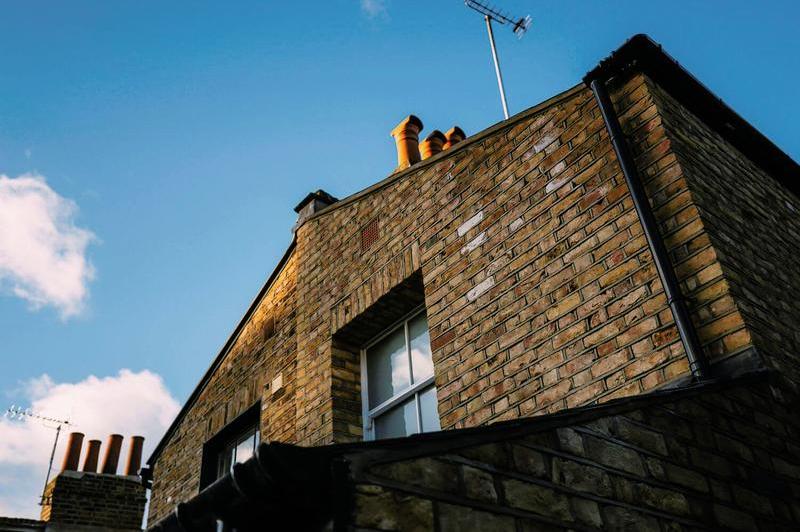
Although external wall insulation offers clear energy performance benefits, it is not always the right solution for every property. The most common drawback is upfront cost, as installation is typically more expensive than simpler efficiency measures.
There is also the matter of visual change. Because the system is applied to the outside of the building, the property’s appearance will inevitably be altered, which may not suit every home or location and can occasionally introduce planning considerations.
External wall insulation can work well on many solid-wall homes, including some Victorian properties, but it's not always the right choice. If your home is listed, in a conservation area, exposed to flooding or severe weather, or has existing repair or damp issues, the design needs much more care and you may need planning consent or specialist advice before going ahead.
The success of external wall insulation depends heavily on how carefully it’s installed. If detailing is rushed or key steps are missed, issues can surface months or even years later. Poor sealing around openings or inadequate moisture control can allow water to become trapped behind the system, increasing the risk of damp patches, mould growth and internal condensation. In more serious cases, cracking or movement in the finish can compromise both appearance and performance.
Because of this, external insulation should never be approached as a straightforward rendering job. It requires proper preparation, correct fixings, and careful attention to ventilation and weatherproofing — all of which underline the importance of using a contractor who genuinely understands the system being fitted.
External wall insulation is not purely a materials purchase — performance relies heavily on detailing, moisture management, and work quality.
Working with a trusted builder that's a member of FMB reassures you that your exterior wall insulation project should be hassle-free because:
They also agree to abide by our Code of Conduct - meaning they offer a professional experience from start to finish. Click below to get started today.
Once external wall insulation is in place, many homeowners notice the difference straight away. Walls that previously felt cold to the touch tend to hold heat more effectively, helping rooms maintain a steadier temperature throughout the day.
Better thermal performance can also reduce the likelihood of condensation forming on internal surfaces, helping limit damp patches and mould growth. When paired with efficient heating controls or low-carbon systems, these improvements support a broader fabric-first retrofit strategy — reducing heat loss before looking at how that heat is generated.
Over time, this approach contributes to lower energy demand, improved comfort, and stronger EPC ratings.
The impact on energy performance will differ from house to house, but properties with solid walls often see a marked improvement once external insulation is added, as they don’t have cavity insulation to help retain heat in the first place.
Potential advantages include:
However, savings depend on existing performance, heating system, and insulation specification.
After a period of steep rises and unpredictable swings, construction prices have largely settled, although that doesn’t mean they’ve stopped moving altogether. External wall insulation work is still influenced by wider industry conditions, particularly the availability of skilled trades and changing energy requirements.
Installing these systems isn’t a general building task; it requires people who understand the finer points of detailing, moisture control, and how different components work together. Where experienced installers are in short supply, projects can take longer to schedule, and labour rates can edge upwards as a result.
External wall insulation can deliver meaningful comfort and efficiency improvements while simultaneously modernising a property’s appearance. Costs are influenced by scale, specification, and preparation — rarely by insulation alone.
Well-planned projects, executed by experienced professionals, are far more likely to achieve the intended performance and visual results without costly remedial work later.
Committing to external wall insulation is a big decision for any homeowner. To help you feel confident about your project, we’ve rounded up the most common questions we hear at the FMB. If you’re looking for straightforward advice on the practicalities of upgrading your home, you’re in the right place.
Usually, no. It’s often considered "permitted development" as long as the finish looks similar to what was there before. However, if you live in a conservation area or a listed building, you’ll likely need to speak to your local authority first. Read our guide to permitted development rights for further information.
Every home is different, but solid-wall properties often see a big improvement. Because external wall insulation stops heat from escaping through the walls, you’ll likely find you don’t need to run your heating as often to stay comfortable.
Installing external wall insulation in typical semi-detached house usually takes between three and four weeks to complete, depending on the weather. Because the work happens outside, there’s very little disruption to your daily life indoors.
While EWI is a fantastic choice for many solid-wall properties, it isn’t always the right fit for every house. If your home is a listed building, sits in a conservation area, or is frequently exposed to severe weather and flooding, the project will need much more care and specialist advice before you start. It’s also vital to fix any existing damp or repair issues first; otherwise, you risk trapping moisture behind the new insulation, which can lead to condensation and mould inside your home. Because of this, it’s best to work with trusted builders who understand moisture control and can ensure the system is perfectly sealed around windows and doors.
Yes, it can have a significant impact on your home’s Energy Performance Certificate (EPC) rating. A better rating can make your home more attractive to future buyers and help reduce your energy bills, as well as your carbon footprint.
Modern external wall insulation systems are designed to be very durable and should last for 30 years or more if they’re installed correctly. Using high-quality renders also helps keep the exterior looking fresh for longer with minimal maintenance.
It certainly can contribute to your home’s value. Beyond ‘kerb appeal’, external wall insulation can improve a property’s EPC rating, especially if combined with other energy efficiency retrofit work. As energy efficiency becomes a higher priority for UK buyers and mortgage lenders, a home that is 'future-proofed' and cheaper to run is often more attractive and easier to sell.
If you're thinking about improvinmf the warmth and energy efficiency of your home, take a look at our ultimate guide to insulation to see what simple steps you can take to insulate your house and really make a difference to your energy bills.

Learn how the right house insulation cuts energy bills, boosts comfort and adds value – expert advice from the FMB.

Making your home energy efficient starts with the fabric of your home. Here’s how to take a ‘whole house’ approach to a warmer home and lower energy bills with retrofit.
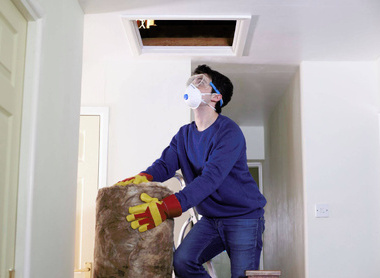
How do you insulate a loft and slash your heating bills? Our experts explain what you need to know, the pitfalls to avoid, and offer tips on hiring a trusted builder.