

How to choose a trusted builder in the UK
Need help choosing a builder? Follow our step-by-step guide to find trusted, vetted professionals for your home build, renovation or extension.
Cut your energy bills and enjoy year‑round comfort with our complete guide to house insulation – the comprehensive, step‑by‑step blueprint to choosing, installing, and maximising your home’s thermal shield.
House insulation is one of the best upgrades you can make, resulting in reduced heating costs and a cosier home. Whether you’re sealing a draughty Victorian terrace, future‑proofing a new build, or simply looking to shrink your carbon footprint, the proper insulation pays dividends in comfort and long‑term value. Our comprehensive guide steers you through the types of insulation available, costs, building regulation requirements, and what to avoid, helping you to plan confidently, find trusted professionals, and unlock the full potential of your home.
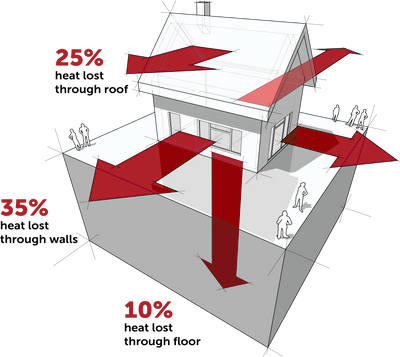
According to the Energy Savings Trust, an uninsulated home loses approximately 35% of its heat through the walls, 25% through the roof, and a further 10% through the floor. That’s a lot of wasted heat that you’re paying for – around £7 for every £10 spent on heating. House insulation plugs those leaks, saving your wallet, creating a comfortable home, and reducing your carbon footprint.
Home insulation also lessens the strain on boilers, prolonging their lifespan, increases property value, and future-proofs your home against rising fuel costs.
However, insulation isn’t just for winter – it also protects against summer heat waves. A good layer of loft or wall insulation slows the flow of hot air into the property, keeping peak daytime temperatures down, delivering cooler nights, and reducing reliance on energy-hungry air conditioning.
Most homes can have insulation added or improved after they are constructed. Known as retrofitting, it’s essential to conduct an energy assessment or retrofit survey to identify which elements need improvement. This ensures your home achieves the highest level of energy efficiency possible. Many FMB members are experienced insulation retrofitters who can advise you on the best options for your home, provide competitive and trustworthy quotes, and carry out the work to the highest standard.
A whole‑house approach treats your home as one integrated energy system rather than a patchwork of individual upgrades. Before touching the boiler or shopping for solar panels, look at the entire building fabric, including walls, floors and roofs for airtightness and ventilation, planning measures so they work together.
PAS 2030, the government’s retrofit guidelines, provide a framework for upgrading the energy efficiency of UK properties. It reinforces the whole-house approach, with every project starting with a full survey of heat‑loss, moisture, and ventilation, then sets out a fabric‑first sequence that tackles the biggest leaks first and avoids unintended damp.
In practice that means insulating from the top down, beginning with the loft. Once the heat‑loss is reduced, consider resizing or replacing the heating. A smaller, cheaper‑to‑run boiler or heat pump can now cover the reduced demand, and any low‑carbon tech you add, such as solar panels, delivers faster payback.
By seeing the house as a single thermal, moisture, and ventilation system, the whole‑house approach locks in long‑term savings and resilience in one coordinated plan.
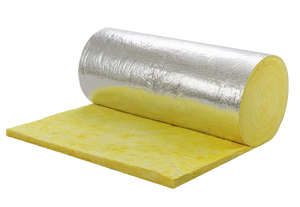
You can’t think about house insulation without considering U- and R-values. The U-value measures how well an area, such as a wall or roof, or material, retains heat, with a lower U-value indicating better insulation and reduced heat loss.
Insulating materials are given an R-value. This number indicates the material's effectiveness in resisting heat flow – the higher the better.
As the R-value increases, depending on your chosen insulating material, the U-value decreases, indicating a reduced heat transfer.
You should be aiming for U-values of at least 0.16 for loft insulation, 0.30 for walls, and 0.25 for your floors.
Three main areas of your home are ideal for insulation – roof, walls, and floor, with each requiring a different approach. There are many materials available for your project, and most will have the R-value displayed on the label.
Considering that your home can lose up to a quarter of its heat through the roof, loft insulation is a valuable addition to your home energy saving arsenal. The UK government recommends a minimum loft insulation thickness of 270 mm, and properly laid insulation has a lifespan of over 40 years.
There are two main installation approaches:
Most post-1920s brick homes have cavity walls – two parallel walls separated by a 50-100 mm gap and tied together with metal wall ties. The gap stops rain from seeping through, but left empty, it lets around a third of all the heat in the house escape. Cavity wall insulation fills the void with thermally efficient material, preventing warm air from leaking away.
Retrofitting cavity wall insulation requires drilling 22–25 mm holes into the property’s walls at approximately one-metre intervals, allowing the insulating material to be pumped in under pressure until the cavity is full. Cavity walls are typically filled with polyurethane foam, expanded polystyrene (EPS) beads, or mineral wool fibre.
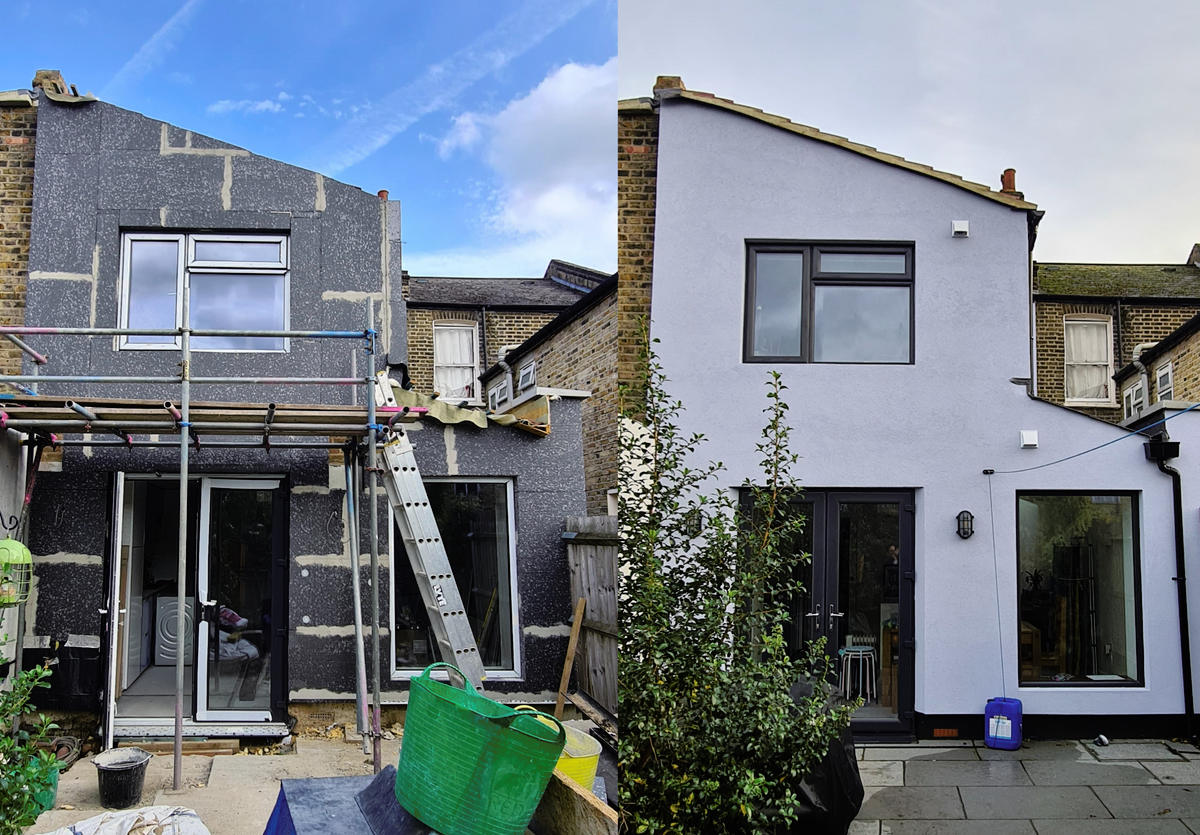
Homes built before the 1920s typically have solid walls without cavities. Without insulation, they can leak around 45% more heat than a modern, fully insulated cavity wall. Solid wall insulation is attached to either the interior or exterior wall face and requires covering the surface with layers of insulating material.
With 10% of your home’s heat escaping through the floors, underfloor insulation can make a big difference to your bills and comfort. Generally, only the ground floor requires insulating, unless there is an unheated space below, such as a garage.
There are several options available, depending on your floor type and budget.
When we talk about house insulating today, you’re no longer limited to the classic rolls of itchy “loft wool.” The UK market now offers several options, each aimed at balancing space, cost, sustainability and performance:
Carl Goodhew, Director at G2 Construction and Consultancy Ltd, one of our long-term members, gave us his expert advice on house insulation:
Choosing the cheapest insulation saves money in the short term, but works out expensive in the long run. DIY stores don’t necessarily have the right product to meet compliance. Building merchants are the best sources of insulation, as they understand the regulations, and know what makes a good product.
Yes, it is, but it depends on who carries out the assessment. A reputable, knowledgeable contractor will know what your house needs, but a surveyor may not. It comes with experience. As a contractor, I have seen projects based on correct theory that have failed as the surveyor had sound knowledge, but lacked practical experience. A good contractor has real-life experience, but may not have the academic training.
Avoid pop-up, inexperienced companies applying external insulation – we are seeing more and more problems caused by these companies, including severe structural damage.
External insulation requires a deep understanding of the installation process, its relationship with internal insulation, what fixings to use – the list is endless. A fabric first approach requires knowledge, and then someone experienced enough to design a plan to achieve a better performing home.
Insulating your home can significantly reduce your heating costs, provide a quick return on investment, and reduce your carbon footprint. The size of your property, the area you wish to insulate, and the material you use all impact these figures.
According to the Energy Saving Trust, installing 270 mm loft insulation in a typical semi-detached property will cost around £900, save £230 on annual heating bills, and reduce CO2 emissions by 600 kg per year.
For the same property, cavity wall insulation could cost £2,700, with annual savings of £240 and a reduction of 650 kg of CO2.
To make insulation more affordable, the government has removed VAT on home insulation until the end of March 2027.
A competent DIYer can tackle the lower-risk home insulation projects, such as rolling out mineral wool in the loft space. However, you’ll need to follow the basics by wearing protective gear, keeping eave vents clear so the loft can breathe, and laying boards carefully so you don’t squash the insulation, halving its benefit. Make a mistake and you could trap damp, fail a fire test, or in the case of spray foam insulation, void your mortgage – costly errors to rectify.
Professional help is worth every pound for more complex jobs, complying with Building Regulations, and providing aftercare. Injecting cavity wall insulation, lining solid brick walls, adding rigid boards at rafter level, or spraying foam under a roof all require specialist equipment, moisture-risk calculations, and airtight detailing.
Professional installers will also handle the Building Regulations paperwork, offer insurance-backed warranties and make sure everything goes smoothly.
Before starting your insulation project, it is essential to understand the building regulations regarding house insulation. Ensuring your installation enhances efficiency, the regulations also make sure your insulation meets the standards for fire resistance, safety, and moisture control.
Experienced insulation installers will explain the relevant guidelines and should strictly adhere to the regulations.
Part L of the Building Regulations (Conservation of Fuel and Power) sets minimum thermal performance standards for every new home and most alterations to existing ones.
Part L requires you to ensure that corners, junctions, and openings are properly insulated, and there are no areas with thinner or broken insulation. Areas lacking in insulation, known as thermal bridges, allow heat to shortcut through the building fabric, leading to concentrated heat loss and possible condensation.
Building regulations also dictate the depth of insulation to achieve the maximum thermal efficiency. The insulation thickness needed will vary depending on the material used and its thermal properties. For example, solid wall insulation should be 100 mm thick, roof insulation 270 mm, and floor insulation 150 mm.
You’ll need to factor in fire resistance and moisture management. If your chosen insulation material isn’t fireproof, treat it with an approved fire retardant. Ensure there’s adequate ventilation to keep moisture levels low, and vapour barriers are beneficial in eliminating damp and reducing the risk of mould.
Finally, confirm whether planning consent is required, especially if you’re adding external wall insulation. If the installation significantly alters the building's external appearance, the property is in a conservation area, or is a listed building, you may need planning permission.
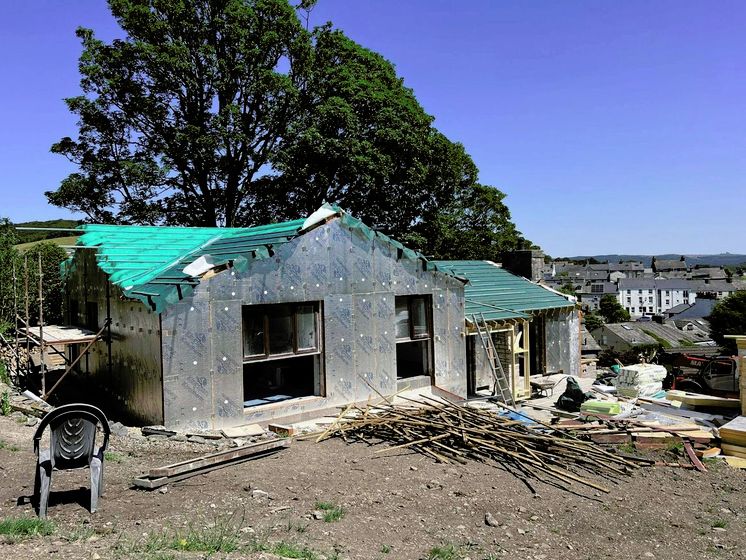

Nikki Lambert, Director at Lambert Home Builds, a trusted FMB member, answered our questions on house insulation:
Each home is unique, and homeowners should consider their starting point. Evaluating how high their energy bills are before any insulation work and estimating the potential savings post-insulation can offer insights into the effectiveness of any proposed improvements.
Consider which parts of the home make the biggest contribution to heat loss as these will make the most difference if improved. Easy wins, such as draught proofing or insulating the loft, should come before the more costly or disruptive options.
For example, installing 270 mm insulation in an uninsulated loft can save on average £270 in a three bed semi-detached property (based on Energy Saving Trust research using January 2024 energy prices).
Think about what materials your house is made from, its age, construction type, and how many improvements have already been made as this may guide your insulation choices.
Prior to having any insulation work done, it’s a good plan to book an energy assessment, which can answer some of these points for you, and seek professional advice. Remember, your project may need to be checked with Building Control. Your Local Authority Building Control ( LABC) can offer advice.
The more expensive insulations can offer a higher thermal resistance (R value), such as rigid foam boards, and this can mean less is required to meet the requirements for Building Regulations. This may offer better value, but it does depend on your circumstances and the specification for the insulation site.
However, in addition to cost there are other aspects to consider.
Insulation is available in many different forms, ranging from mineral or glass wool in slabs, often called batts, to blown-in insulation and natural fibres, such as hemp, and each type has its own characteristics.
The age and construction of your home may mean that some materials are more suitable than others. Homes that are listed or in conservation areas may need to preserve certain features.
While sustainable, low environmental impact insulating materials are an evolving field, natural fibres offer many benefits in terms of breathability and acoustic performance.
Whatever insulation material you choose, it must meet current Fire Safety and Building regulations – this information should be readily displayed on the labelling.
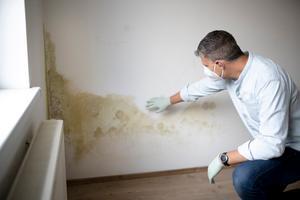
Some avoidable slip-ups turn a well-intentioned insulation job into an expensive disappointment. Here are the most common pitfalls:
You should consider the following frequently asked questions before work begins to ensure your home insulation project goes to plan.
Upgrading loft, wall or floor insulation lowers your home’s heatloss figure, raising its EPC rating by up to two bands, from an E to a C, for example. Because buyers and lenders increasingly use EPC bands as a shorthand for comfort and future energy bills, estate agent reports suggest that increasing your home’s band can add around 20% to its value and cause it to sell up to 5% faster over similar, lessefficient properties.
Mineral wool, rigid boards, and properly installed cavity wall insulation should perform effectively for at least 40 years. However, some fibre-based materials can settle slightly and may require topping up after a couple of decades.
Breathable options, such as wood-fibre boards, cork, hemp-lime, or calcium-silicate, allow moisture to move through old masonry and evaporate, thereby avoiding trapped damp that can damage lime mortar or timber.
In addition to keeping your house insulated, mineral wool and wood-fibre boards also absorb sound waves. Using them to line any party walls or floors will minimise external noise intruding, or internal noise disturbing neighbours. Rigid foams, by contrast, do very little for acoustics.
Biobased products such as woodfibre, recycled paper cellulose, and hemp store more carbon in their fibres than is emitted during manufacture, so their embodied carbon can be close to zero or even negative.
Emerging contenders, such as mycelium (mushroom-based) panels, are also showing promise and are grown from agricultural waste while storing carbon.
Specialist contractors use extraction rigs to vacuum loose fibre or beads out through the wall. Once clean and dry, the cavity can be refilled.
You can double up by filling the cavity and adding either external or internal wall insulation. However, in most cases, it only offers minimal energy saving, while adding cost and increasing the risk of damp.

Need help choosing a builder? Follow our step-by-step guide to find trusted, vetted professionals for your home build, renovation or extension.

With the increase in awareness about the impacts of climate change, more homeowners are exploring ways to improve the energy efficiency of their home, but where do you start?
Whether you are having a new extension built, self-building a house, or renovating a property, you need to ensure building work meets current building regulations.