



Licence to Build: A model for licensing domestic building companies
A licensing model for domestic construction is essential. Here’s how it can work - and why the UK needs it now.
In the UK today, anyone - regardless of training, skill, or experience - can legally carry out construction work. No tests. No proof of competence. Just tools in hand and access to your home, your business, your safety.
This lack of basic regulation is holding our industry back and costing UK homeowners billions. £14.3 billion over the past five years to be exact*. It puts lives at risk, damages trust, and undermines the reputation of every honest professional delivering high quality work.
We believe this is unacceptable. We’re calling for a Licence to Build.
We want to raise the bar with the introduction of a national licensing scheme—because every builder should meet minimum professional standards before working on site.
Licensing will:
We owe it to the public. We owe it to the professionals who take pride in their work. We owe it to the future of our industry.
Let’s build trust. Build standards. Build better.
* Research conducted by the Federation of Master Builders and HomeOwners Alliance.
We’ve teamed up with the HomeOwners Alliance to ask builders and homeowners what they think about licensing. The result? Strong support across the board - 86% of builders want the government to introduce a scheme that protects both the trade and consumers.
Our research shows a big gap between expectation and reality. 47% of UK adults wrongly believe builders are already licensed and 65% expect builders to have insurance. It’s no wonder homeowners feel confused – and good builders feel let down.
Consumers expect quality and accountability. 39% think builders have passed a competency test while around a third believe builders must be registered with a professional body like the FMB (35%) or a government scheme (32%). It’s time expectations matched reality.
A significant number of people have hired builders who turned out to be unreliable or unqualified and 22% of people in the UK have been left with unfinished building work. Licensing would set a clear standard for who can trade — and who shouldn’t.
Poor workmanship isn’t just frustrating — it’s costly and damaging. 33% of homeowners have been affected by poor workmanship and 15% of UK adults have lost money to builders in the past five years - at an average cost of £1,759 per person. Without a licensing system, there’s no baseline to ensure builders meet basic standards of competence.
Rogue builders often quote low to win work — then pile on unexpected charges. A licensing scheme would help homeowners spot the difference between a cowboy and a quality builder from the start.
Behind every rogue builder is a real person left to pick up the pieces. These are the voices of homeowners who through no fault of their own, trusted the wrong people and paid the price – emotionally, financially, and in some cases, with their health.
Their stories show what happens when there’s no safety net – no licensing, no minimum standards, and no accountability.
Having had several competitive quotes, we hired this trader in August 2024, paying nearly £4,000 upfront for patio doors and windows. After brickwork had been removed by a reliable builder, he repeatedly delayed installation with excuses, mis-measured twice, and delivered the wrong frames.
Communication was appalling; he ignored calls and emails. We later discovered he was not insured as claimed and had registered new companies under different names, making it difficult to recover our money. There is little consumer protection against people like him.
”
Entrusting my life savings to a builder for a much-needed extension after my MS diagnosis turned into a horrific ordeal. My home needed future-proofing, but instead I encountered deception and destruction.
Now, I am left with a damaged house and a drained pension. Regulation is desperately needed to protect vulnerable homeowners from such predatory practices.
”
In early 2024, trusting review sites, I hired a builder to extend and fit a new kitchen, utility, and patio. Despite handing over £72,000, the project began but quickly stalled. I later paid another £36,000, only for work to halt entirely and communication to disappear.
Despite contacting Citizens Advice Bureau and Trading Standards, no action was taken, and a solicitor warned that recovery of funds was unlikely.
After months of stress, sleepless nights with our home torn apart, I sought counselling. The thought of the 17 years of second mortgage repayments for the initial outlay, plus the repairs costing £85,000, with £8,500 still needed, forced me to take a redundancy offer from the company I loved.
This experience exposed the lack of consumer protection against fraudulent traders. Sharing my story made me realize how widespread the issue is, highlighting the urgent need for stricter regulations and enforcement.
”

For the past eight years, my life and those of my neighbours have been turned upside down by the actions of an unregulated property developer next door. What should have been a peaceful retirement has instead been marked by constant distress: illegal developments, loss of sunlight and privacy, and, most damagingly, persistent flooding.
The lack of regulation and accountability for property developers has left us with permanent damage and no practical recourse, as legal action is simply unaffordable.
This experience has shown me how urgently we need stronger protections and proper regulation to prevent others from suffering as we have.
”
Licensing works for everyone. It gives homeowners peace of mind and helps builders who take pride in their work stand out. Here’s how a proper system of checks and standards would raise the bar across the board.

A licensing model for domestic construction is essential. Here’s how it can work - and why the UK needs it now.
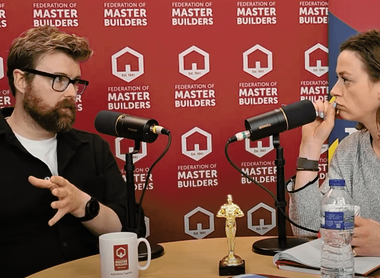
What would builder licensing mean for your business? FMB unpacks the facts, the misconceptions, and what better regulation could look like.
Our research report looks at the potential benefits of introducing a mandatory licencing scheme for UK construction.

Designing and implementing a mandatory licensing framework for the UK construction industry won’t be simple but the effort will be worth it, says Liz Peace.

Our research report sets out a post Grenfell agenda for quality and professionalism in construction.